

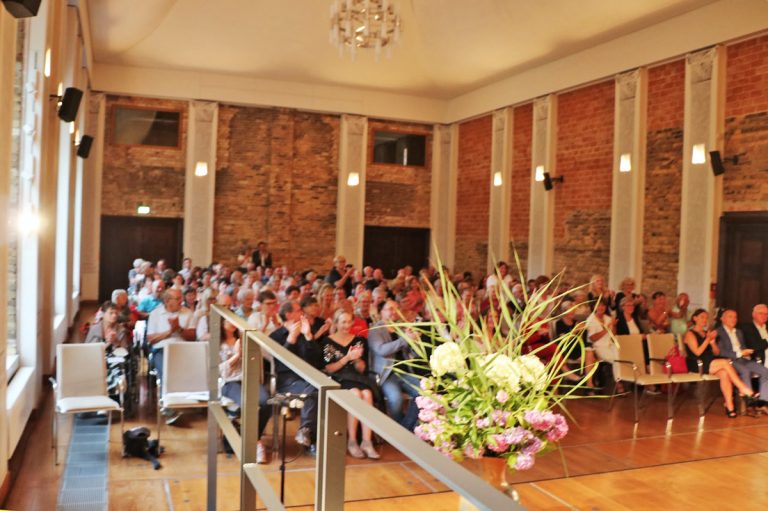
We have been a non-profit association dedicated to the promotion of art, culture, and science since 2020. Our goal is to initiate and foster exchange and dialogue across cultural boundaries and academic disciplines. Our high-quality concerts, seminars, and discussion events are aimed at a broad audience from near and far. We strive to engage outstanding experts in their respective fields who are also willing to actively participate in fact-based discussions with our audience.
In doing so, we focus on the unique characteristics of the tri-border region with our immediate neighbors, the Czech Republic and Poland, within the Euroregion Neisse. At the same time, we also maintain a broader perspective toward Eastern regions such as Ukraine, Russia, and Central Asia.
In general, participation in our events is free of charge, and we provide accessible support for visitors with disabilities. Of course, we welcome donations to further support our work and project proposals.
We are committed to engaging outstanding experts in specialized fields who are also willing to actively engage in meaningful, subject-based discussions with our audience. The inclusion of people with disabilities is an important objective of our association.
Our domicile

Our domicile – the Art Deco Villa Hänsch – has a tumultuous history. Built before the Great Depression by the son of the founder of Iduna Werke, from 1930 it became a meeting place for social elite, business leaders, and National Socialist politicians. From May 1945, the impressive building served as an officers’ casino and club. In 1948 it was handed over to the German-Soviet Wismut AG as a maternity convalescent home for young mothers. From 1952 to 1989, the building with the distinctive copper dome was known as the “Julius-Wordelmann” Recreation Home, serving the GDR’s Free German Trade Union Federation (FDGB or Freier Deutscher Gewerkschaftsbund) as a central accommodation in the resort town of Großschönau. It acted as a contact point for holiday guests housed in the local traditional Umgebinde houses. A small number of select guests were allowed to stay in the main building itself, with the home managers living in the garden house. From 1989, under the management of the Treuhand trust agency, the building was used initially as a restaurant and retirement home. Since 2005, it has been being professionally restored to its original glory in close cooperation with the State Office for Monument Preservation in Dresden. Villa Hänsch is located on the Textile Education Trail and can be visited upon request.
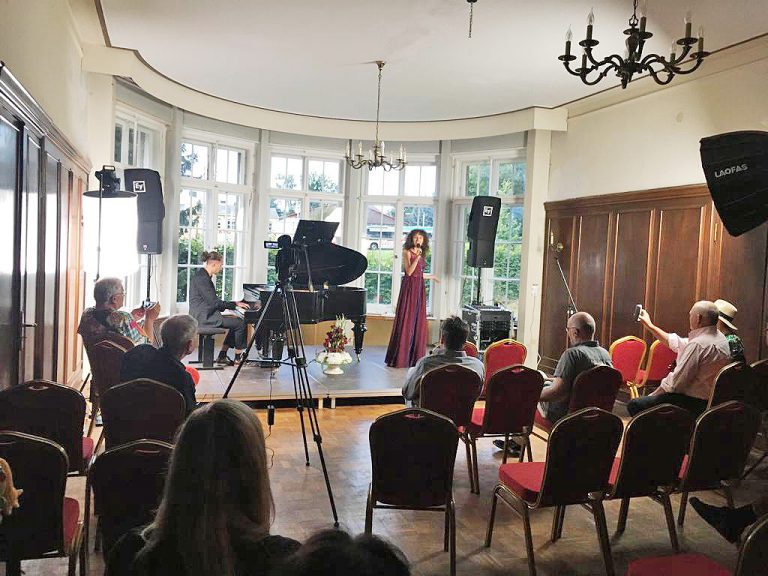
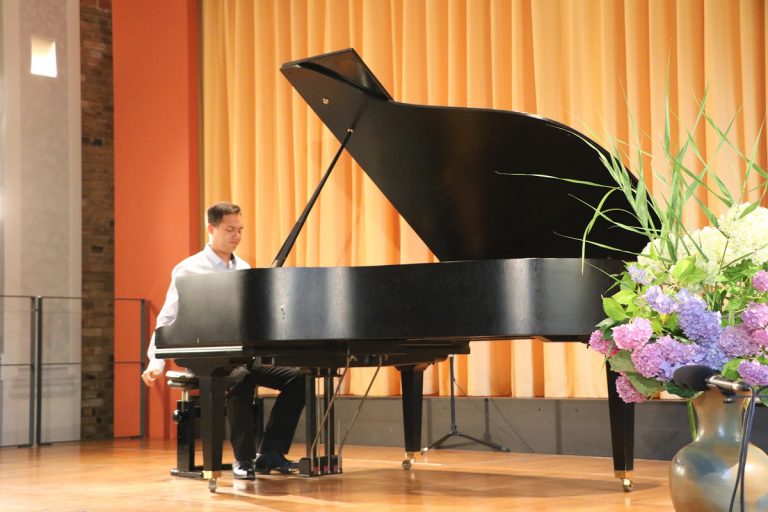
The villa contains a large event hall with a stage, concert grand piano, and comfortable seating for up to 100 guests. A modern sound system, lighting, and internet access are available. Barrier-free, disabled-accessible washrooms and toilets are available for our guests. Additionally, it is possible to use a comfortable, tastefully-furnished apartment for overnight stays and behind-the-scenes discussions in the villa.
As part of this ongoing process, work is beginning on the restoration of a club room, the expansion of exhibition space on the first floor, and the installation of a barrier-free kitchen for catering purposes.